What Really Happens in Your Body During Radiation Therapy? A Deep Dive into the Cellular Battlefield
HealthIf you’ve recently been told that radiation therapy is the next step in your cancer journey, you’re likely feeling a surge of "medical vertigo." You stand before a multi-ton, high-tech machine, hearing terms like "linear accelerator," "gray units," and "ionization." But the most haunting question usually remains unspoken: "What is this beam actually doing to the delicate machinery of my life inside my body?"
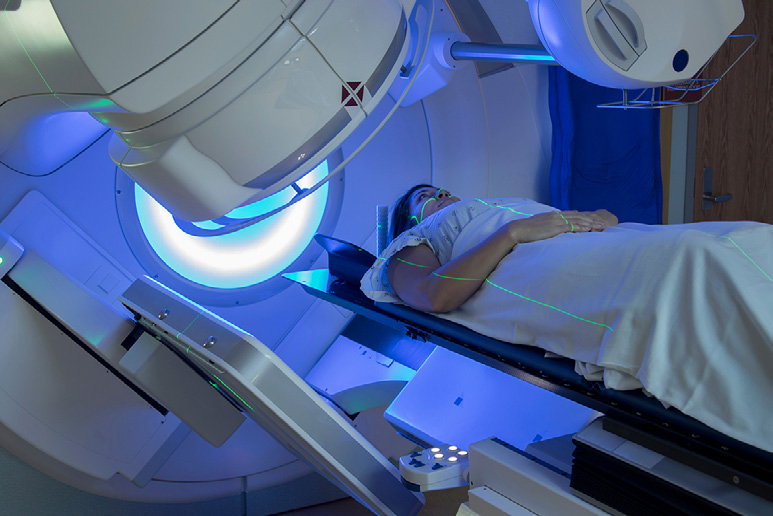
For many US patients, radiation feels like a "black box" treatment—invisible, silent, and mysterious. However, understanding the intricate biological drama that unfolds at the molecular level can transform your fear into a strategic roadmap for recovery.
1. The Invisible Strike: The First Seconds of Impact
The moment the radiation therapist leaves the room and the machine hums to life, a silent, high-energy event begins. Unlike surgery, where a scalpel physically removes a mass, radiation uses ionizing energy to perform a microscopic "dissection."
When the beam—whether it's X-rays, gamma rays, or protons—enters your body, it travels through your skin and healthy tissue until it reaches the targeted coordinates. At that exact point, the energy hits the water molecules inside your cells. This creates a cascade of "Free Radicals"—highly reactive oxygen species that act like tiny biological grenades.
These free radicals have one mission: to break the double-helix ladder of the cancer cell's DNA. This is called "Mitotic Death." The goal isn't to kill the cell instantly, but to damage its "instruction manual" so severely that when the cell tries to divide and grow, it simply falls apart.
2. The "Repair Gap": Why Cancer Dies While You Live
One of the most profound things happening inside you is a competition of repair.
Every time you receive a dose of radiation, both cancer cells and healthy cells are damaged. However, healthy human cells have spent millions of years evolving sophisticated "repair crews" (enzymes) that can fix broken DNA overnight. Cancer cells, by their very nature, are mutated and chaotic; their repair crews are "broken."
This is why your oncology team at institutions like the Cleveland Clinic or Johns Hopkins schedules your treatments in small, daily "fractions."
During the day: The radiation breaks the DNA.
At night: Your healthy cells repair themselves, while the cancer cells struggle and fail.
Over 5 to 7 weeks, this cumulative "repair gap" is what eventually leads to the tumor shrinking while your healthy tissue survives.
3. Collateral Damage: The Reality of Side Effects
While modern technology like IMRT (Intensity-Modulated Radiation Therapy) is incredibly precise, the "exit and entry" of the beams still affect the surrounding environment. This is the root of the side effects that patients find most distressing:
The "Sunburn" from Within: Your skin cells are among the fastest-growing in the body. Because radiation targets fast-growing cells, the skin in the "treatment field" may temporarily stop regenerating, leading to redness, dryness, or peeling (radiation dermatitis).
The Fatigue Mystery: Patients often ask, "Why am I so exhausted if I'm just lying there?" The answer lies in your metabolism. Your body is currently running a biological marathon. It is working 24/7 to clear away dead cancer debris and rebuild every healthy cell damaged during the day. This "metabolic debt" is what creates that profound, heavy tiredness.
The Inflammation Spike: Radiation triggers an immune response. Your body senses the cellular damage and sends white blood cells to the area, causing localized swelling or "radiation fog" (if treating the head and neck).
4. The "Post-Beam" Effect: What Happens After You Go Home?
A common misconception is that the treatment ends when the machine turns off. In reality, the biological "fireworks" continue for hours and even days.
The Delayed Response: You might not feel side effects in the first week. This is because it takes time for the damaged cancer cells to attempt division and fail. Most patients notice the most intense "body events" in the third or fourth week of a standard US treatment course.
Fibrosis and Long-Term Healing: As the tumor site heals, the body may replace the dead cancer cells with "fibrosis" (scar tissue). This is why providers like the Mayo Clinic emphasize the importance of hydration and movement to keep tissues supple and prevent long-term stiffness.
5. Navigating the Cost of Modern Precision in the US
In the United States, the level of precision you receive often correlates with the technology used. This creates a complex financial landscape for patients and families:
Treatment Type | Estimated Cost (US) | The "Inside" Advantage |
Standard EBRT | $8,000 - $20,000 | Reliable, wide availability. |
IMRT | $15,000 - $35,000 | Shapes beams to avoid critical organs. |
Proton Therapy | $45,000 - $75,000 | Stops exactly at the tumor; zero "exit dose." |
SBRT/CyberKnife | $20,000 - $40,000 | High-dose "shorthand" treatment (1-5 days). |
While Medicare Part B and most private insurers like Blue Cross Blue Shield or Aetna cover these, the "hidden costs" of recovery—specialized topical creams, nutritional shakes to combat weight loss, and travel to specialized centers—can be significant. Many top-tier centers now offer financial navigators to help patients find "co-pay assistance" programs.
6. Managing the Journey: Proactive Steps for Patients
Because you now know that a "micro-war" is happening inside you, you can take specific actions to support your "healthy repair crews":
Protein is Your Mortar: Your body needs amino acids to repair the DNA and cell membranes of healthy tissue. Increase your lean protein intake significantly during these weeks.
Skin Care is Non-Negotiable: Use only oncology-approved, non-scented lotions. Think of your skin as a shield that needs constant reinforcement.
The "Second Opinion" Strategy: If you are treating a sensitive area (like the brain, heart, or lungs), ask your provider if Proton Therapy or Stereotactic methods are available. Precision isn't just about killing cancer; it's about protecting your quality of life 10 years from now.
Conclusion: Trusting the Process
Radiation therapy is one of the most successful tools in modern medicine. While the machinery is intimidating and the side effects are real, the biological reality is a story of resilience. Your healthy cells are remarkably good at surviving this ordeal, while the cancer is inherently fragile.
By understanding what happens inside your body, you move from being a passive recipient of treatment to an informed architect of your own recovery. Stay hydrated, stay rested, and trust in the microscopic battle your body is winning every single day.
FAQ
Does radiation stay in my body? No. For external beam radiation, once the machine is off, no radiation remains. You can safely hug your children and pets.
Will I lose my hair? Only if the radiation is directed at a part of your body where hair grows (like the head or face). It does not cause general hair loss like chemotherapy.
When will I feel "normal" again? Most acute side effects subside 4 to 6 weeks after the final session, though energy levels may take a few months to fully bounce back.